
Operation and Maintenance Outsourced Contract Management: Maximizing Value
Optimizing Collaboration and Performance in Outsourced O&M Services

Outsourcing Operation and Maintenance (O&M) services has become a strategic choice for organizations seeking to improve operational efficiency, reduce costs, and focus on core activities. However, effective management of outsourced O&M contracts requires a clear understanding of roles, responsibilities, and strategies to achieve maximum value. This article explores the fundamentals of outsourced O&M contract management, emphasizing the collaboration between clients and external service providers. A downloadable Service Level Agreement (SLA) template is included with this article assisting the reader in creating their own.
The Roles and Responsibilities of the Client
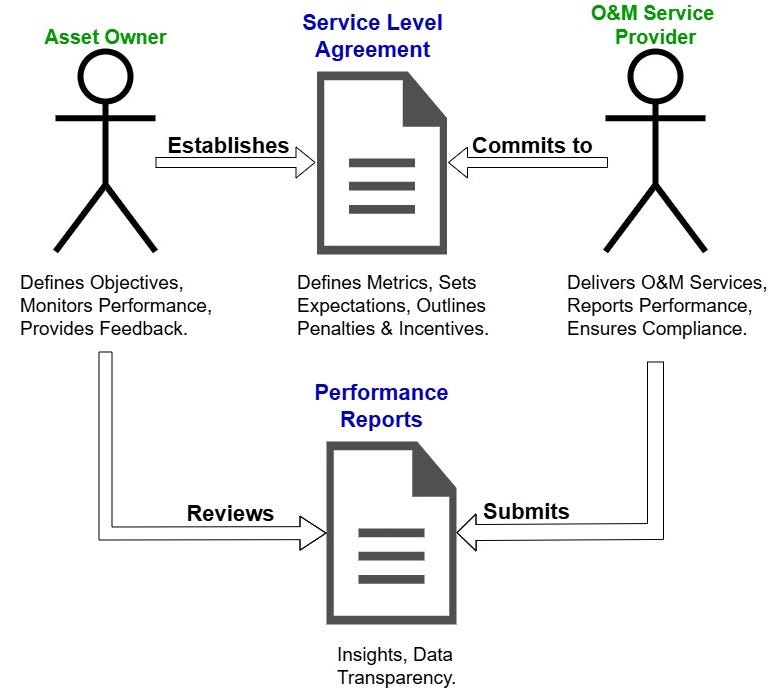
The client plays a pivotal role in ensuring the success of an outsourced O&M agreement. At the outset, the client must define clear objectives and expectations for the contract. This involves specifying service requirements, performance standards, and desired outcomes. The client must also provide access to necessary facilities, systems, and documentation to enable the service provider to perform effectively.
In addition, the client should appoint a contract manager or liaison to oversee the relationship and ensure alignment with organizational goals. Regular performance monitoring is critical, and this can be achieved through structured meetings, periodic reviews, and continuous feedback. By clearly defining their role, the client sets the foundation for a collaborative and productive partnership. For guidance, refer to the downloadable SLA template provided with this article to formalize these roles and responsibilities.
The Role of the Service Provider
The external service provider is responsible for delivering the O&M services as outlined in the contract. This includes carrying out preventive and corrective maintenance, ensuring regulatory compliance, and managing resources effectively. The service provider should also commit to regular reporting, providing detailed insights into maintenance activities, asset performance, and any challenges encountered.
To excel, the service provider must leverage technology, such as predictive analytics and IoT-enabled monitoring tools, to optimize asset reliability and reduce downtime. Transparency and responsiveness are key, as the service provider must address issues promptly and ensure minimal disruption to the client’s operations. The SLA template, available for download, can help clarify the service provider’s obligations, ensuring accountability and measurable performance.
Achieving Maximum Value from Outsourced O&M Services
To maximize the value of outsourced O&M services, both parties must prioritize collaboration and establish clear expectations. A well-drafted Service Level Agreement (SLA) is a crucial document in this regard. The SLA defines performance metrics, reporting requirements, and penalties or incentives tied to service levels. Including this document ensures accountability and provides a framework for evaluating the service provider’s performance. You can download the SLA template provided with this article to customize it for your organization’s needs.

Communication is another critical factor. Regular meetings between the client and service provider foster transparency, address emerging challenges, and align goals. These discussions should focus on operational performance, compliance issues, and opportunities for improvement.
Technology adoption is also vital. Advanced tools like predictive maintenance software and real-time monitoring systems enable proactive issue resolution and improve decision-making. Both parties should explore innovative solutions to enhance efficiency and reduce costs.
Lastly, a commitment to continuous improvement is essential. Lessons learned from ongoing operations should inform updates to the contract, SLA, and processes. Training and upskilling both client and contractor personnel can further enhance the partnership’s effectiveness.
Conclusion
Outsourced O&M contracts offer immense potential for organizations to streamline operations and focus on strategic priorities. By clearly delineating roles and responsibilities, fostering communication, leveraging technology, and utilizing tools like a comprehensive SLA, both clients and service providers can ensure the success of their partnership. A downloadable SLA template accompanies this article, offering a practical starting point for establishing a robust and transparent agreement. With a collaborative approach, organizations can unlock the full value of outsourced O&M services while maintaining operational excellence.